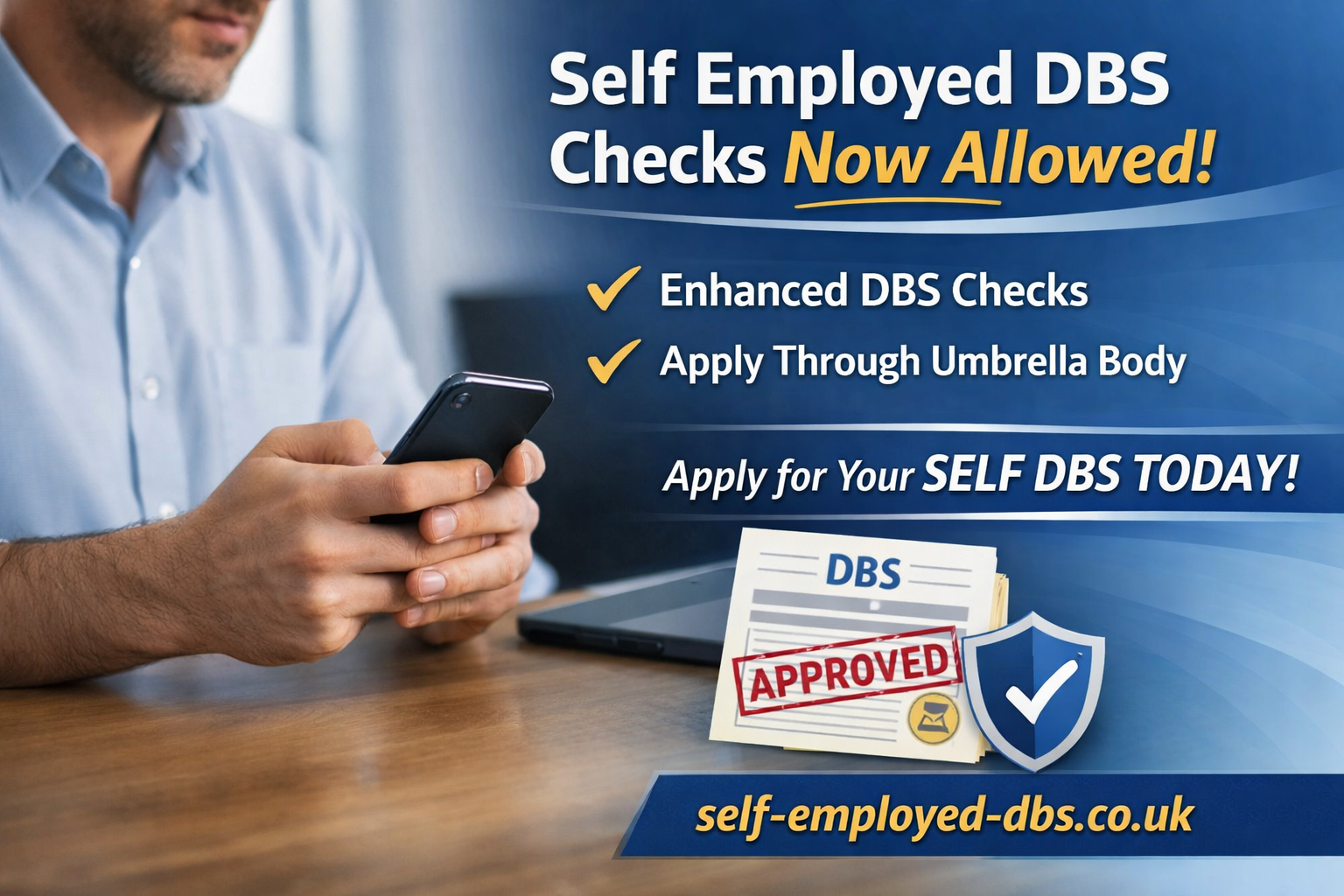
Self-Employed DBS Checks Now Allowed: What Changed and How to Apply
If you’re self-employed and work with children or vulnerable adults, you’ve probably been asked to provide a higher-level DBS check at some point — and hit a wall trying to get one without an employer applying on your behalf.
That has now changed.
Updated DBS guidance makes it significantly easier for self-employed workers and personal employees to access the right level of check through the correct route.
What Has Changed for Self-Employed DBS Checks?
The DBS has confirmed that self-employed people and personal employees can now apply for Enhanced DBS checks — including Enhanced checks with Barred List access — through an Umbrella Body, provided the role is eligible.
Previously, most self-employed applicants were limited to Basic checks, even when their work clearly required a higher standard. This update closes that gap and gives eligible workers a proper, compliant route to the check they actually need.
What Checks Are Now Available?
Eligible self-employed workers can now apply for:
- Enhanced DBS checks
- Enhanced DBS with Children’s Barred List
- Enhanced DBS with Adults’ Barred List
This is a significant improvement for anyone who needs a compliant DBS certificate for safeguarding purposes, contractual requirements, or client reassurance.
How to Apply for a Self-Employed DBS Check
To apply correctly, you’ll need to:
- Confirm your role is eligible for the check level you need
- Select the correct workforce type and check level
- Apply through an Umbrella Body
- Complete identity verification
- Submit your application and wait for processing
If you want a faster, clearer process specifically designed for self-employed applicants, our sister site can help: self-employed-dbs.co.uk
Self-Employed DBS: Frequently Asked Questions
Can self-employed people now apply for an Enhanced DBS? Yes. The updated guidance confirms that eligible self-employed workers can access Enhanced checks through an Umbrella Body route. This is the key change — it makes a compliant Enhanced DBS application possible for far more self-employed workers than before.
What’s the difference between a self-employed DBS and a standard DBS? A self-employed DBS check is simply a DBS check for someone working independently rather than through an employer. The check itself is the same — the difference is in how it’s applied for and who submits it.
Can I choose an Enhanced check even if my role isn’t eligible? No. This update improves access, but it doesn’t change eligibility rules. The check level must be appropriate for the work you actually do.
Do personal assistants and direct hires qualify? Many do, depending on the nature of the work and the level of contact with children or vulnerable adults. This update is particularly helpful for personal employees, as it makes the correct route much clearer.
Do I need a Barred List check? Only if your role involves regulated activity and is eligible for one. You’ll need to select the right option when applying — getting this wrong can cause delays or result in an incorrect certificate.
Can my client apply for me instead? Yes, if your client is an organisation with the ability to submit DBS applications. However, many self-employed workers prefer to manage the process themselves using the Umbrella Body route, which this update now makes much more accessible.
How long does a self-employed DBS check take? Processing times vary depending on the check type and whether local police searches are required. A correctly submitted application reduces the risk of delays.
Ready to Apply?
If you’ve been waiting for a clear, proper route to apply for your DBS check as a self-employed worker, this change makes it straightforward.
A correctly submitted Enhanced DBS check helps you meet safeguarding expectations, build client trust, and win work with confidence.
To get started, visit self-employed-dbs.co.uk